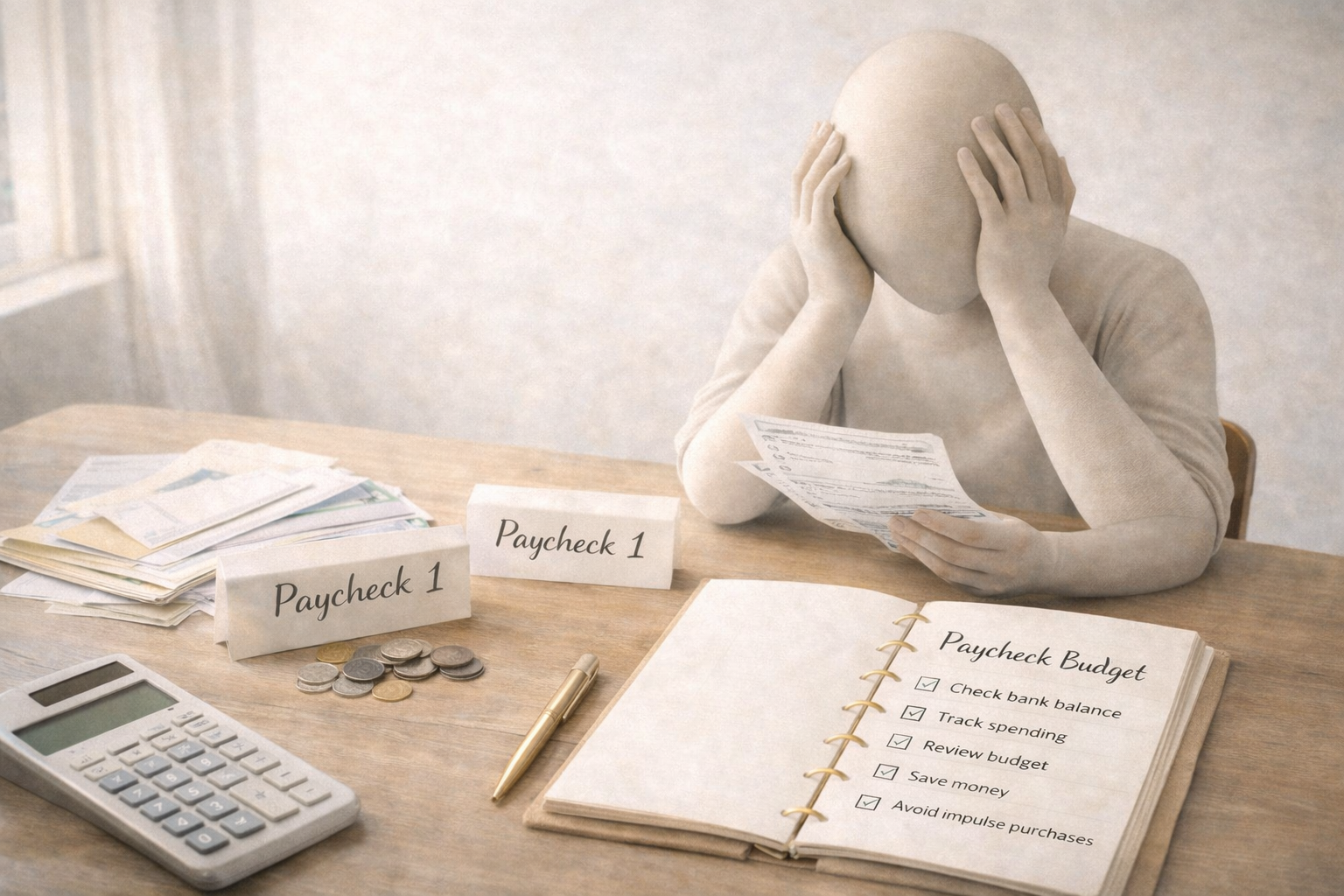
A Simple Step-by-Step System to Stop Running Out of Money Before Payday
A Simple Step-by-Step System to Stop Running Out of Money Before Payday

Introduction
Paycheck budgeting is one of the simplest ways to stop running out of money before payday and regain control of your finances.
This experience is known as the paycheck-to-paycheck cycle. Even people who make good money can struggle with it. The problem usually isn’t income. The real issue is how money flows between paydays.
Traditional budgets assume you receive income once per month. But most people are paid every two weeks or twice per month. When bills and paydays don’t line up, financial stress begins.
If you’ve ever wondered why money disappears so quickly after payday, read this guide:
Why You Feel Broke After Payday (Even If You Make Good Money)
If you’re new to paycheck budgeting, start with this step-by-step beginner guide.
The Step-by-Step Paycheck Budgeting System That Works
Paycheck Budgeting for Beginners: The Simple Paycheck 1 & 2 System — a simple walkthrough showing how to organize bills by paycheck.
Want a Done-For-You Paycheck Budget System?
If you’d rather not build your budget from scratch, the Paycheck Protection Plan provides a simple printable system that helps you organize bills, track paychecks, and prevent cash-flow gaps.
View the Paycheck Protection PlanFree Paycheck Budget Template
Download the simple paycheck budgeting template that helps you organize bills, track spending, and stop running out of money before payday.
Enter your email to download the free template instantly.
What You’ll Learn in This Guide
- What paycheck budgeting is
- Why monthly budgets fail
- The step-by-step paycheck budgeting system
- Daily money habits that stabilize finances
- How to break the paycheck-to-paycheck cycle
What Paycheck Budgeting Is
Paycheck budgeting is a budgeting method where you organize expenses around each paycheck instead of the entire month.
Instead of asking, “What do I need to pay this month?” paycheck budgeting asks a more practical question:
What needs to be paid before my next paycheck?
This approach creates clarity. Every bill is assigned to a paycheck so your money has a purpose before it is spent.
Many people use this method to build a simple biweekly budget that reflects how income actually arrives.
You can see a detailed breakdown of this system here:
Why Most People Run Out of Money Before Payday (And How to Fix It)
Why Monthly Budgets Often Fail
Monthly budgets sound simple, but they often fail because income does not arrive monthly for most workers.
Instead, income is typically received:
- Every two weeks
- Twice per month
- Weekly
When bills arrive at different times than paychecks, it creates financial pressure.
For example:
- Rent due on the 1st
- Car payment due on the 10th
- Utilities due on the 20th
If your paycheck arrives on the 6th and the 20th, the first paycheck must stretch across several large bills. This is how many people unintentionally fall into the paycheck-to-paycheck cycle.
The Step-by-Step Paycheck Budgeting System That Works
Step 1: List Every Monthly Expense
Start by writing down every recurring expense you pay each month.
- Rent or mortgage
- Utilities
- Insurance
- Car payments
- Subscriptions
- Groceries
- Transportation
Step 2: Identify Your Pay Schedule
Next, identify your pay schedule. Most workers are paid biweekly, which means there are 26 paychecks per year. Some months even include a third paycheck, which can be used to boost savings.
This is where a biweekly budget becomes extremely useful.
You can see a full system here:
Paid Biweekly? Use This 5-Step Budget System
Step 3: Assign Bills to Each Paycheck
Divide your bills between each paycheck so that expenses are covered before they are due.
- Paycheck 1 covers rent and groceries
- Paycheck 2 covers utilities and savings
This ensures every bill has a plan before payday arrives.
Step 4: Set Weekly Spending Limits
After bills are covered, determine how much spending money remains. Dividing that amount into weekly limits helps prevent overspending early in the pay cycle.
Step 5: Track Your Spending
Tracking spending helps you stay aware of where money is going. Even a simple notebook or budgeting app can help reinforce your system.
If you need a financial reset plan, read:
How to Budget Paycheck to Paycheck: A Realistic Money Reset Plan

Daily Money Habits That Strengthen Your Budget
Budgeting systems work best when supported by small daily habits.
- Check your account balance
- Track spending
- Review your budget weekly
- Plan upcoming expenses
These habits help maintain awareness and prevent financial surprises.
Explore these habits in more detail here:
7 Daily Money Habits To Stop the Paycheck-to-Paycheck Cycle
How to Stop Living Paycheck to Paycheck
Breaking the paycheck-to-paycheck cycle requires both structure and awareness.
- Create a small emergency buffer
- Automate savings when possible
- Increase awareness of spending patterns
According to research from the Consumer Financial Protection Bureau, cash flow timing is one of the most common reasons households experience financial stress.
If you’re ready to move beyond survival mode, read:
Break the Paycheck-to-Paycheck Cycle
Common Paycheck Budgeting Mistakes
Many people attempt paycheck budgeting but struggle because of a few common mistakes.
- Not assigning every dollar to a purpose
- Forgetting irregular expenses
- Overspending early in the pay cycle
- Not reviewing the budget weekly
A simple weekly check-in can help you adjust your spending and stay aligned with your budget.
Conclusion
Feeling broke before payday is one of the most common financial frustrations people experience. Fortunately, paycheck budgeting offers a practical solution.
By aligning your bills with your pay schedule, you gain clarity and control over your money. Over time, this system reduces stress and helps build financial stability.
Related Paycheck Budgeting Articles
Common Paycheck Budgeting Mistakes
Many people attempt paycheck budgeting but struggle because they unknowingly make a few common mistakes.
1. Forgetting Irregular Expenses
Expenses like car maintenance, annual subscriptions, or holiday spending often get overlooked. A strong paycheck budget includes a small buffer for these non-monthly costs.
2. Budgeting the Entire Month at Once
Traditional monthly budgets often fail because they ignore how income actually arrives. Paycheck budgeting works better because it aligns bills with real pay dates.
3. Not Tracking Spending Between Paychecks
Even a good paycheck budget can fail if daily spending is not monitored. A quick weekly check-in helps prevent overspending before the next paycheck arrives.
Benefits of Paycheck Budgeting
Once implemented correctly, paycheck budgeting provides several long-term financial advantages.
- Better control over cash flow
- Reduced financial stress
- Improved bill organization
- Clear visibility of spending
- More consistent savings habits
By assigning expenses to the paycheck that arrives before each bill is due, you reduce the risk of late payments and avoid the financial anxiety of running out of money before payday.
How to Break the Paycheck-to-Paycheck Cycle
Breaking the paycheck-to-paycheck cycle requires both structure and consistency. Paycheck budgeting is a powerful tool because it focuses on managing cash flow rather than simply tracking expenses.
Start by listing every bill, assigning each to the correct paycheck, and setting a weekly spending limit. Over time, small adjustments to your spending habits can create financial breathing room and help you begin building savings.
Many people find that once their bills are organized by paycheck, financial stress decreases dramatically because they know exactly where their money is going.
Daily Habits That Support Paycheck Budgeting
A paycheck budget works best when supported by simple daily money habits.
- Checking your bank balance each morning
- Tracking spending weekly
- Reviewing upcoming bills before each paycheck
- Avoiding impulse purchases
- Adjusting spending when necessary
Small habits like these reinforce your budgeting system and help maintain long-term financial stability.
Example of a Simple Paycheck Budget
To understand how paycheck budgeting works in practice, consider a simple example. Imagine you are paid twice per month on the 6th and the 20th. Instead of budgeting the entire month at once, you divide expenses between the two paychecks.
For example, the first paycheck might cover rent, groceries, and transportation expenses. The second paycheck may cover utilities, insurance, and savings contributions. By assigning bills to the paycheck that arrives before the due date, you create a clearer financial structure.
This approach helps prevent the common problem of paying large bills too early in the month and then struggling to make it to the next payday. Paycheck budgeting ensures your money is distributed according to your actual pay schedule rather than an arbitrary monthly calendar.
Why Paycheck Budgeting Works for Real Life
Many budgeting systems fail because they assume income arrives once per month. However, most workers receive paychecks biweekly or semi-monthly. Paycheck budgeting solves this problem by aligning your financial plan with your real pay schedule.
When bills are organized around paycheck timing, it becomes easier to track spending, prepare for upcoming expenses, and avoid overdrafts or late payments. Over time, this structured approach creates financial stability and helps people gradually move away from the paycheck-to-paycheck cycle.
For beginners, starting with a simple paycheck budget template can make the process even easier. Once you understand how to assign expenses to each paycheck, managing money becomes significantly less stressful.
Leave a Reply