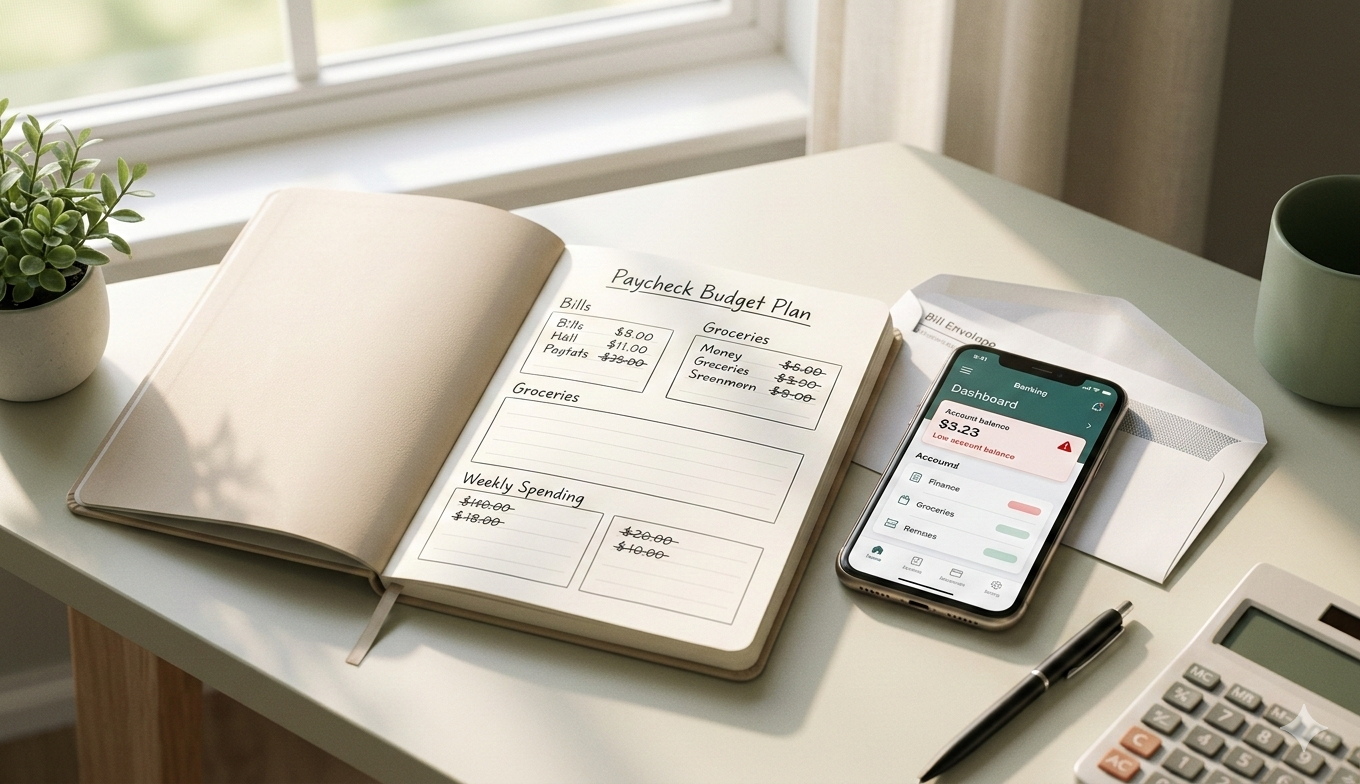
The Real Reason Your Paycheck Disappears So Fast)
If you’ve ever wondered why you feel broke after payday even though you earn a steady paycheck, the problem usually isn’t income — it’s how money flows through your pay cycle.Many working adults experience the same frustrating pattern.
You receive your paycheck, feel relief for a moment, and then somehow the money disappears faster than expected.
If you have ever wondered why you feel broke after payday, the answer often has less to do with income and more to do with how money flows through your pay cycle.
Understanding this pattern is the first step toward breaking the paycheck-to-paycheck cycle.
Stop Running Out of Money Before Payday
The Paycheck Protection Plan gives you a simple system to assign bills by paycheck so your money lasts longer.
Get The Paycheck Protection Plan – $7
Download the Paycheck Protection Plan here →
The Real Reason Money Disappears After Payday
Most people assume the problem is overspending.
Understanding why you feel broke after payday allows you to create a system that prevents money from disappearing too quickly.However, the real issue is usually cash-flow timing.
Bills, spending, and automatic withdrawals often cluster around the same time — right after payday.
This makes it feel like money disappears instantly.
A Typical Paycheck Timeline
- Friday: Payday
- Saturday: Groceries and weekend spending
- Monday: Bills automatically withdraw
- Tuesday: Online purchases
- Wednesday: Balance already low
The Payday Spending Effect
There is also a psychological reason money disappears after payday.
When people receive income, they feel temporary financial relief. This often leads to impulse purchases, eating out more often, and relaxed spending decisions.
This behavior is sometimes called the payday spending effect.
The solution is not eliminating spending. The solution is creating a system that directs each paycheck before the money disappears.
Understanding why you feel broke after payday helps you create a paycheck budgeting system that keeps your money working until the next payday.Why Monthly Budgets Fail for Biweekly Paychecks
Traditional budgeting assumes income arrives once per month.
But many working adults are paid every two weeks.
That means you receive 26 paychecks per year, not 12.
This mismatch is why monthly budgets often fail.
If you want a system built specifically for paycheck earners, read this guide:
How to Budget Paycheck to Paycheck
The Paycheck Budgeting Method
Paycheck budgeting focuses on managing money one paycheck at a time.
Instead of planning an entire month, you assign expenses to each paycheck.
Step 1: List Your Essential Bills
- Rent or mortgage
- Utilities
- Insurance
- Phone bill
- Debt payments
Step 2: Assign Bills to Paycheck 1 or Paycheck 2
Match each bill with the paycheck that occurs before the due date.
- Paycheck 1: Rent, groceries, internet
- Paycheck 2: Car payment, insurance, utilities
Step 3: Set Weekly Spending Limits
After covering bills, divide remaining money into weekly spending categories.
- Groceries
- Gas
- Dining out
- Personal spending
Tools That Make Paycheck Budgeting Easier
If you prefer using a physical budgeting system, these tools can help organize your finances.
- Clever Fox Budget Planner & Monthly Bill Organizer
- Budget Planner and Monthly Bill Organizer + Cash Envelope System
- The Psychology of Money
The 5-Minute Payday Routine
Every time you receive a paycheck, take five minutes to review your finances.
- Review upcoming bills
- Confirm which paycheck covers each bill
- Set weekly spending limits
- Transfer money to savings
This simple routine dramatically improves financial control.
Understanding why you feel broke after payday allows you to build a paycheck budgeting system that keeps your money organized and prevents financial stress between paychecks.Signs Your Paycheck Budget Needs Adjustment
If you constantly feel broke after payday, your paycheck budget may need small adjustments.
Watch for these common warning signs.
- You spend most of your money within the first few days after payday.
- Bills feel like they arrive all at once.
- You rely on credit cards between paychecks.
- Your account balance drops unexpectedly.
These are signals that your money needs better organization, not necessarily more income.
A paycheck budgeting system spreads expenses across each pay period so your money lasts longer.
Final Thoughts
Feeling broke after payday is extremely common.
But it does not mean you are bad with money.
Often the real problem is simply a lack of structure around how paychecks are used.
Once you start assigning bills to specific paychecks, your money begins working with you instead of against you.
Ready To Stop Living Paycheck To Paycheck?
The Paycheck Protection Plan shows you exactly how to organize bills by paycheck so your money lasts until the next payday.
Download The $7 Paycheck Protection Plan
Leave a Reply